Why Bootfitting Matters
The easiest way to improve your skiing and your enjoyment on the snow is to take an instructor. This is what we do and we are always happy to help you improve; even just a few hours with an instructor can set you up for more successful skiing in the future.
The second easiest way to ski better is to get your ski boots professionally fitted.
What does that mean? Ski boots translate the movements you make with your body, legs and feet onto the ski, which then translates those movements onto the snow. This is what gives your turns the shape, edge, and power you want them to have.
But what if those movements aren’t being perfectly transmitted onto your skis? You lose performance every time.
Meet Max Bauer: The Boot Whisperer
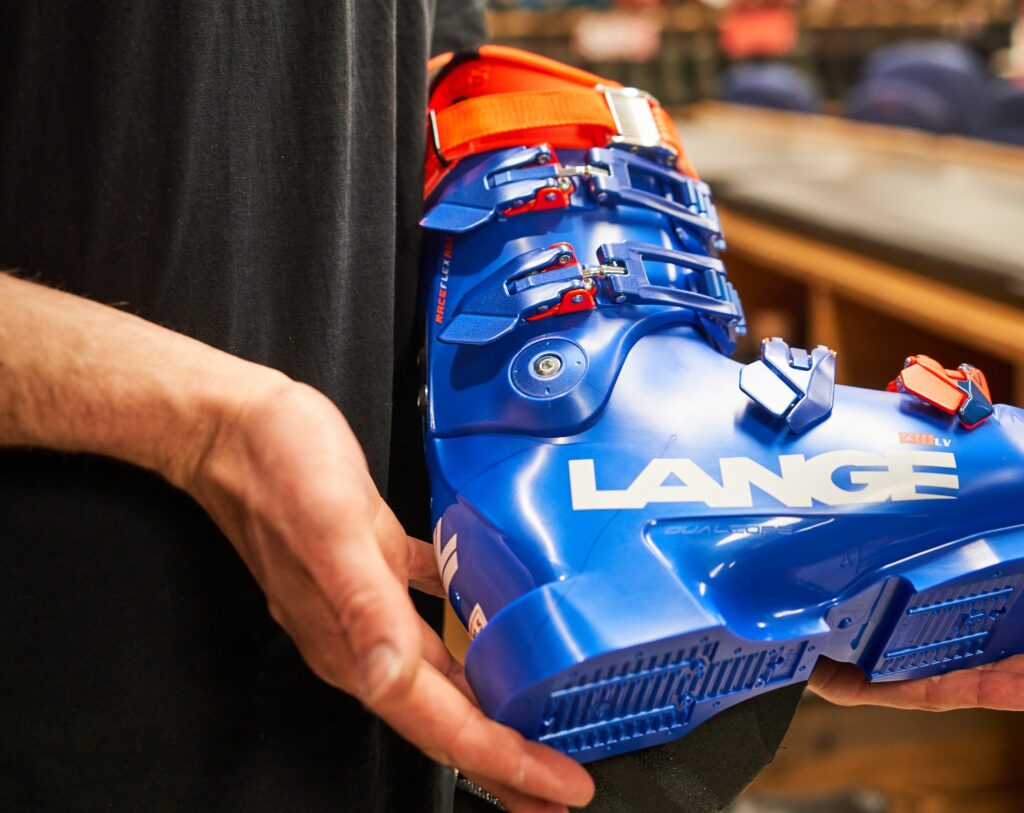
We interviewed Max Bauer, master of ski boot fitting at our host shop Glacier Sport in Zermatt, about what he does. He explained the difference a good boot can make, and the detailed processes he goes through to help improve your comfort and performance on the snow.
Max sees two main types of clients at Glacier Sport:
- The Improver – You’ve been renting in the past and want to improve the feel and results in your own boots.
- The Expert – You’re an experienced skier looking to solve problems with the fit and comfort of your boots.
The goal of getting a custom ski boot fitting is to adapt the boot to the requirements of your skiing and your foot. For both types of client, Max goes through a personal review of the issues you are experiencing, what you want to change, the results you are looking for, and the balance of performance and comfort you seek.
The Bootfitting Process: Step by Step
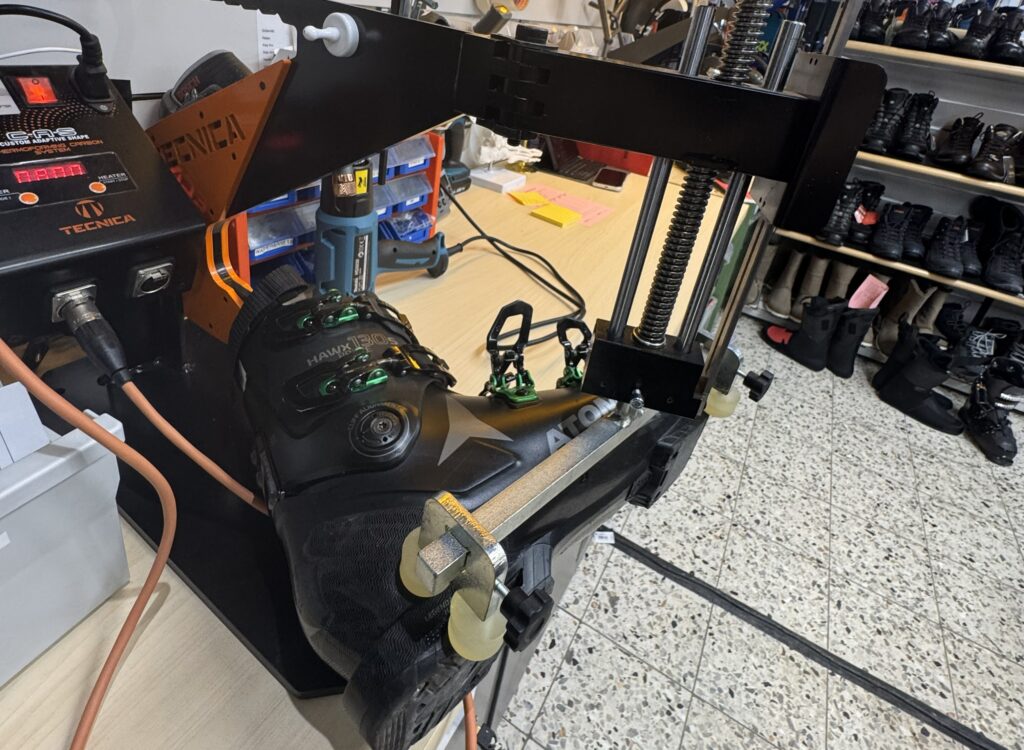
Let’s look at the steps involved in this process.
Step 1: Foot Analysis
Max takes a detailed look at the foot and lower leg, including measuring proportions, size, volume, shape and flex, and looking at how your foot is weighted.
Step 2: Shell Selection
He makes a preliminary shell selection, with second and third options also lined up. By putting your foot into the shell without the liner, he can assess how much space there is around the foot and identify any possible pressure points.
Step 3: Initial Fit
Trying on the boot with a standard liner means he can get your feedback and see if his thoughts about the adjustments correspond with how it feels to you.
Step 4: Compare Options
You will always try on a second boot, usually moving from a more aggressive fit to a softer fit; this way you can choose your preferred fit and decide together which boot is what you are looking for.
Step 5: Customisation Begins
There are two parts to this:
a) Footbed/Insole
To make a custom ski boot insole, Max will cast an imprint of your foot, and then use a blank footbed which takes on the form of your foot. This gives you better weight distribution, better comfort and better responsiveness of the ski. (If you only want this, you can also go without the rest of the boot fitting experience.) The custom insole is then hand-ground to fit exactly into your boot.
b) Shell Modification
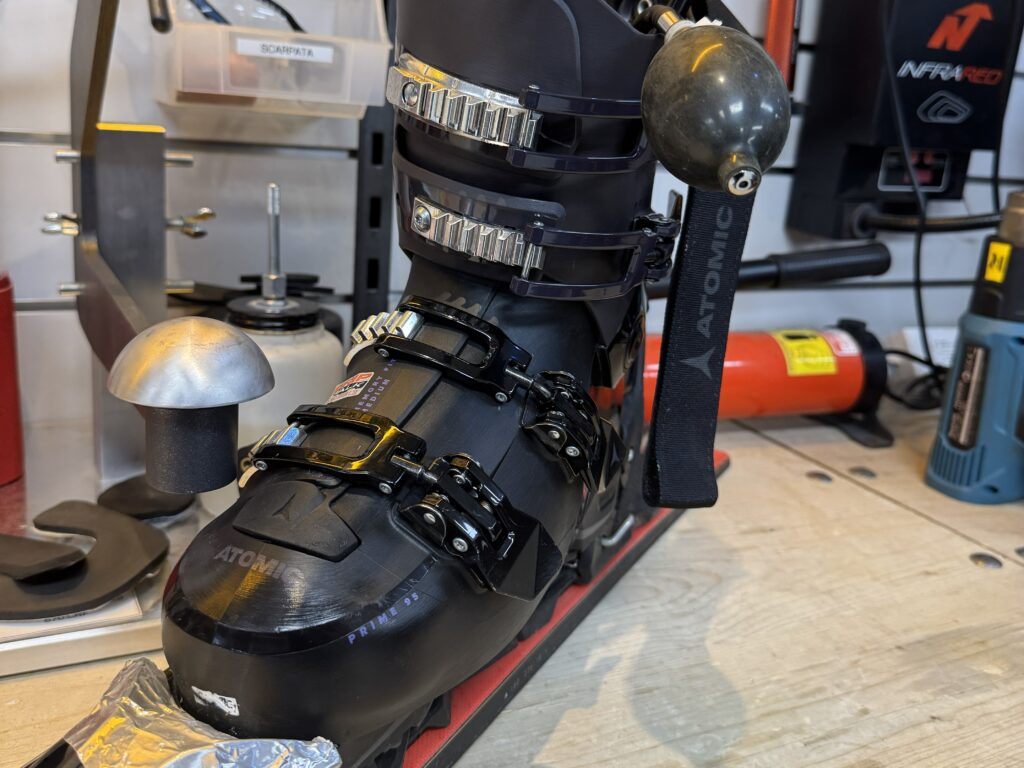
In this step your shell is moulded using heat to adapt to any particular features of your foot. Here you stay comfortable despite any bone spurs, problem areas or other specialities of your own feet.
Extras That Make a Difference

Here you might prefer special liners to add performance. Some options are Zipfit ski boot liners (cork injection), heat mouldable foam liners, or foam injection. Other popular extras are elastic power straps for progressive forward flex. Or many in Zermatt take heated ski boot elements. These keep your feet toasty and warm despite it being winter outside.
Ready to Upgrade Your Skiing?
To see Max about changing your skiing experience, just contact Glacier Sport in Zermatt for professional ski boot fitting. Your feet will thank you!
Contact us here if you would like to arrange your boot fitting.